25
Years
500,830
Students
29,795
Teachers Trained
3.3M
Patients
About The Program
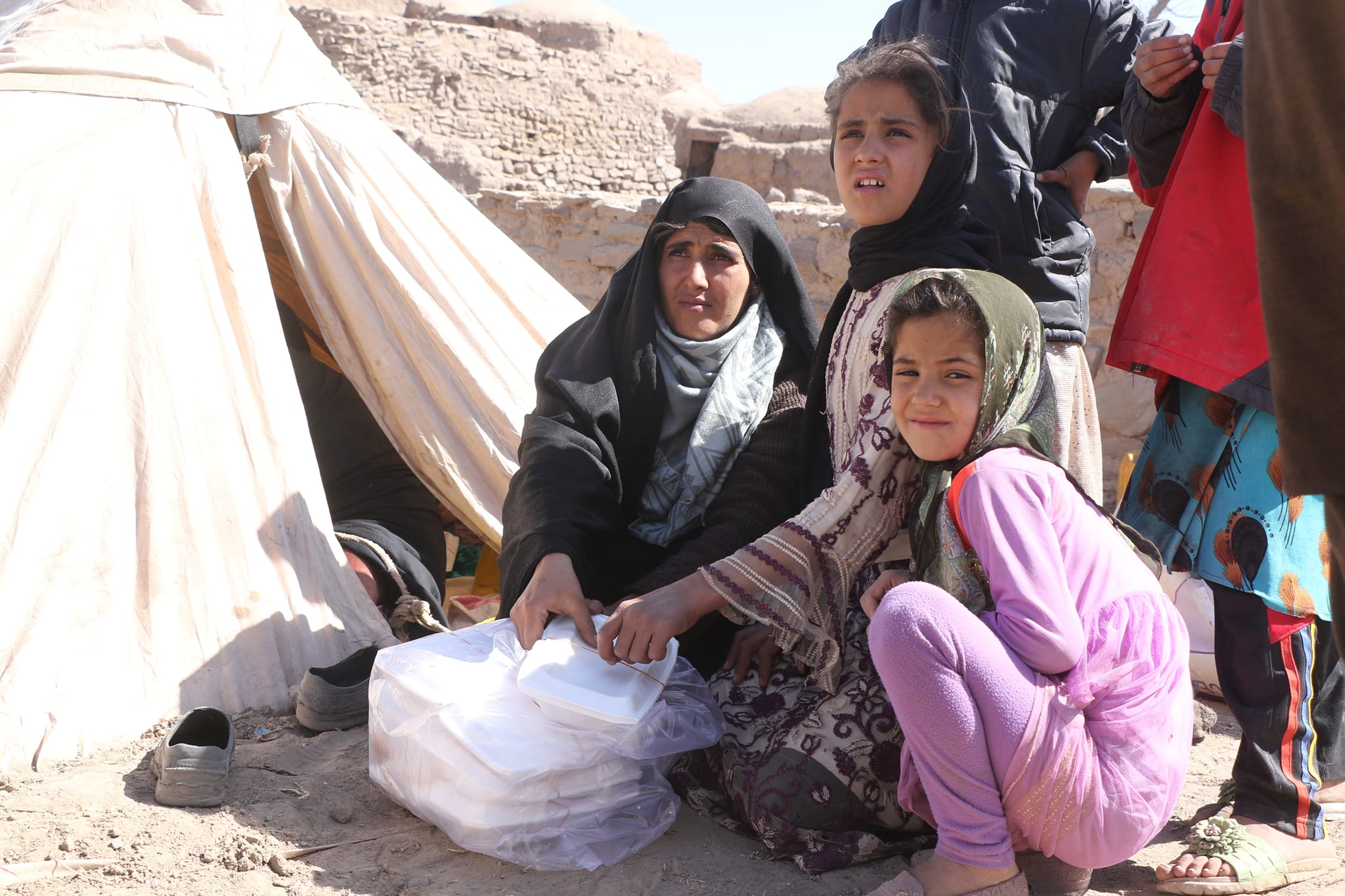
Education is critical for Afghanistan to become a self-sustaining country without need of foreign assistance. The literacy rate of Afghan females is 17%, compared to 45% of Afghan males. Focusing on educating women changes lives and changes minds. In societies where women know how to take care of their health and have skills to contribute to their families, communities see them as capable and valuable.
AIL Learning Centers: Where it all starts.


The first Learning Centers were started in Afghan refugee camps. Today, there are hundreds in communities throughout Afghanistan. Learning Centers provide safe places for women and children (30% of which are male) to study, form friendships and network. Centers are started by request and the community contributes buildings, supplies, or volunteers. AIL trains local teachers and tailors the curriculum. Classes may be offered in academic subjects such as: literacy, math, English, Arabic, in job skills such as: sewing, basic accounting, business management, computers, beautician, carpet weaving. Health education is always offered and can cover nutrition and reproductive health and current diseases. If requested, workshops on topics such as peace, elections, human rights, or leadership are offered. We have centers at a center for the disabled, at an orphanage and a street children facility.
Preschool Education Program: Building on a solid foundation.


Studies show early education helps children develop a drive to learn and prepares them to start school. AIL’s interactive, student-centered preschool education program (PEP) provides hundreds of children with a good foundation in Dari, English, math, science, health, reading, writing, and sports. It was the first of its kind in Afghanistan and is very successful. Some PEP students read before they leave preschool.
Afghan children have never lived during a time of peace and only know a society of civil strife. Children in PEP learn about peace and how to respect their parents, neighbors, and elders. They are taught Afghan songs, dances, poems, and short skits and have performed on Afghan radio and TV, and at other local and national events. This helps build self-esteem, as well as knowledge of their heritage and culture.
Teacher training and supervision is an integral part of PEP, covering everything from creating lesson plans to student-centered teaching methodologies, which are a radical departure from the rote memorization and dictation of traditional Afghan schools. AIL managerial staff and trainers visit PEP sites every week and ensure the latest teaching methodologies are used. Another PEP innovation is encouraging parent and community involvement. Parents contribute food and supplies, and AIL holds monthly parent-teacher meetings. The program is so popular, AIL now has a waiting list for PEP classes.
Teacher Training


For Afghanistan to prosper, it needs an educated people, who are enabled to fulfill their potential, and improve their lives. High-quality teachers trained in modern methods are the underpinning of good education and the creation of sustainable education systems. AIL trains teachers, monitors performance, and provides follow-up supervision and ongoing workshops on the latest theory and practical applications including: writing lesson plans, primary math, literacy, Dari, ethics, classroom principles, psychology, administrative responsibilities, and fundamentals of Afghan law and women's rights. We also bring in students during training sessions so teachers can try new methodologies in a classroom setting. Our training is so successful, the Afghan government consistently requests AIL to train its public school teachers. In 2017, AIL was one of only 14 organizations licensed to train teachers in Herat by the Ministry of Education.
How is this approach different?
Interactive, student-centered teaching is a radical departure from traditional teaching methods in Afghanistan, which were based on dictation, rote memorization, and recitation. Our methods teach students to think critically, use logic for problem solving, and interpret and evaluate information. They are encouraged to ask questions and seek help, share ideas, and help others. This fosters self- confidence and self- reliance. Many students taught by AIL-trained teachers are able to read after only three months, compared to three years when taught using old methods. Some students, so energized by their ability to learn quickly, have completed multiple grades in a single year. The speed with which these new methods are taking hold is promising for the future of education in Afghanistan.
AIL was the first to open Learning Centers for women and girls that offer education and skills training. These women come to the centers to learn, but while they are there they talk, exchange ideas, form friendships and supportive networks of connection. In some areas of Afghanistan, women are rarely allowed to leave their homes and only socialize with women they are related to. But in our Learning Centers I see the beginnings of a network of women. In some countries, this would not be worth noting, but for Afghanistan, this is a big social shift. Some believe that the way for women's lives to improve in Afghanistan is through marches and protests in the streets. I respectfully disagree. While marches and protests will draw attention to the issue, they do not make life better for Afghan women. By giving women a safe space to gather, learn, problem solve and network we have prompted change. Women are taking classes, learning to read, earning an income and taking part in society. The women share ideas and gain confidence and their ideas are taking shape and solving problems.
Before I took this workshop, I didn't feel like I was doing the best I could. I didn't know how to provide services to my community in a way that would give a positive result. The leadership workshop taught me to be a leader. As I go to work, I always see a number of women begging in the street. This made me very sad; my country wasn't always this way, but years of fighting and war have caused problems like this. After the workshop, I decided I could take action. I spoke with an office that was helping with projects, and I proposed paying these women to clean the Women's Garden; this was project that the community wanted. My proposal was accepted, so I gathered the women and took them to the garden. Many of the women said they were begging because their husbands had drug problems, or were unable to work. I told them my plan, and many agreed to work in the garden. For one year, these women came and cared for the garden. They came to realize that they didn't need to beg, and that they were able to earn a living through work.
Other Education Programs
Fast Track is designed to help students catch up, compressing several grades into a single year, with classes in math, literacy, and more. The Fast Track Certificate Program lets older girls or married women continue their studies on an individualized basis with the goal of earning 6th, 9th and 12th grade certifications. AIL expands its offerings when it can and has added classes in English, Computing, and Mobile Literacy.
This four-month course helps students quickly gain literacy skills by texting with a teacher on mobile phones. It's fast, very popular and highly effective. AIL provides students with the phones and, working in small groups or one-on-one, students receive and respond to texts about topics such as democracy, health, human rights, or everyday life. The curriculum covers literacy and life skills. The results have been amazing. We have seen students progress from no knowledge of the alphabet to third- or fourth-grade reading levels in just four months. The mobile phone has the added bonus of connecting students to friends, family, and classmates.
My name is Najeela and we have a poor economic situation. I was not interested in education because I thought I am too old now and I thought that it is impossible to start studying at this age. But after joining Mobile Literacy Class I understood that I was wrong and we can start studying in any age. In these two months I can now write sentences and also send them through texting. Now I want to start school after completing this course and I thank AIL for this opportunity.
AIL supports a library at the Citadel complex in Herat, and we have our own libraries. Our office in Herat has 2,500 books, and our office in Kabul has 3,000 books. Most Learning Centers also maintain libraries, with anywhere from 200 to 2,000 books. Students and staff benefit from access to reading materials and quiet places to study.
My name is Zabihullah. I am studying Computer Science at Ghalib University and I am an employee of AIL. During the first two weeks of my first semester the teacher assigned me a project. I searched the internet but did not find enough information so I was concerned. One of my colleagues suggested AIL’s library. I went to the library and searched for books related to my project. There were many books related to every field of education. I invited my classmates and we were able to prepare our projects. AIL has a good library where it is easier to focus on my studies. In my free time, I go to the library and study, not only books about my field but other subjects too. I want I become a successful IT manager and I think I will achieve that.
This popular class is often the first class women take and acts as a gateway to more learning. Once women realize their capacity to learn, they then take classes in literacy, Arabic and math. The tailoring class includes basic business, communication, and accounting skills giving graduates what they need to go on and set up their own small business.
When I started the class I did not know anything about sewing and could hardly make dresses. I had financial problems, too. I was wondering what I could do to solve my problems. A friend suggested taking a sewing class at the AIL center. I have learned how to sew clothes professionally. At first, I wasn’t good at sewing, but gradually I built up my confidence and skill.
After I graduated, I decided to open my own tailoring business. A friend of mine helps me run the store. I had few customers at the beginning but people liked my dresses and that’s how I attracted more and more customers. Then I was able to work for 12 hours every day! I am fortunate because now my financial situation is good. I make around 15,000 to 30,000 Afghanis a month. I decided I could help other women and teach them what I learned through my business. So now I teach sewing at a couple of local centers here in Jabraeel. I help other women by teaching dressmaking skills and I earn a salary from teaching. I have more than 30 students in each class. A great number of my students are successful with more than 30 of them starting their own businesses! That makes me happy!
AIL's teacher training staff visit centers regularly to help improve management practices, implement interactive teaching methods, and increase student enrollment, particularly of female students. Ultimately, our goal is to train women to support themselves and become leaders in their communities.
For example, Parima was a student at an AIL Learning Center. After completing the course, she established her own business sewing garments and began earning a good income. Because Parima’s village didn’t have a center, she began training women and girls in tailoring on her own. She's now working with AIL. When her students complete her course, they can take AIL’s final sewing exam to earn an AIL certificate.
Many Afghans have forgotten or never learned about the country's history or rich cultural heritage. AIL believes it's important to cultivate pride in our country, so our curriculum and publications include stories about Afghan culture. We also offer classes in traditional crafts, such as calligraphy, tile making, miniature painting, carpet weaving, and traditional silk and nut weaving.
This group aims to engage young people in the long history of poetry in Afghanistan and to revive the art of writing. There are frequent gatherings, and enthusiasm for poetry is encouraged through writing competitions and readings. One of the participants said, "I am a college teacher. I didn't know about poetry, but after attending the gathering I understand a lot and I am now more interested in reading and writing poems myself."
AIL publishes books, textbooks, and teaching manuals including: Learn About Birds, a children's book; a book on the historic Afghan art of calligraphy; Peace Education, which is taught at centers, preschools and in workshops; Women’s Empowerment, covering topics on women’s solidarity, culture, the environment, skills for the workplace, effective communication, creativity, law, marriage, and public speaking; School Policy and its Uses; Poetry and Song Book for Kindergarten; English for Kindergarten; How to improve Communication; How to make Lesson Plans for Teachers; Mobile Literacy Messages; Leadership Skills; Teacher Training; Healthcare Messages for AIL Clinics; Teaching Mobile Literacy Classes; and the ZMQ Mobile App Pregnancy Monitoring Program.
Nida-e-Talem, or "Voices of Education," is published twice a year and includes news, information on AIL activity, stories, essays, jokes, health tips, math questions, a children’s section, and interviews. A recent issue covered stories about better education for a better life; the Afghan constitution; an introduction to the Haft Qalam historical stone; education during the time of King Amanullah Khan, and how to reduce the rate of divorce in society. The magazine accepts submissions from people all over Afghanistan, and is passed from person to person, reaching thousands of AIL students, NGOs, and the general public.
Salam Salam Bachaha is a quarterly children's magazine of short stories and educational topics published by AIL and UNICEF.
After years of strife, much of Afghanistan’s natural environment has been devastated. The Green Afghanistan Workshop brings nature back into the education system and revives lost traditions and ancient knowledge. People are learning how to restore the landscape, and care for and use native plants. The greening initiative gets young people involved in environmental clean-up, planting trees and educates people about air, water and soil pollution and water conservation.
In 2011, a library and research center was opened at the Gawhar Shad Mausoleum, part of the Gawhar Shad Musalla complex in Herat. (The complex dates back to the 15th century and is currently being restored for historical accuracy and modern functionality.) AIL provided the initial 200 books, shelving, and desks, and pays for a full-time librarian. After opening, we asked teachers to provide one book and more than a thousand were received in a few days. The library's collection continues to grow, covering history, literature, psychology, health, and politics. It's a destination for school field trips, and a resource and place of study for local students and the public.
An historic fort, The Citadel now houses classrooms where students can learn the traditional Afghan arts. Classes in calligraphy, miniatory (Nagaristan Mashhal), carpet weaving, silk weaving, glass making and tile making are offered. AIL pays the salaries of the teachers, who are a mix of people with degrees in art from the Herat University and skilled craftsmen. There is also a modern photography class where students learn standard and digital photography and videography.
Professor Yacoobi dedicated a large portion of one floor of her office building in Herat as an arts center called Behzad Hall, in tribute to the great Afghan artist, Behzad. The official opening was attended by the Minister of Information and Culture, his Deputy, members of Parliament and several delegates of the Herat government.
Education Gallery


Other Programs


From Our Blog