|
The Afghan Institute of Learning.
Since 1996
Impact 9 million Students 275,298 Centers 326 Teachers Trained 19,886 Civil Society Members Trained 8,436 Patients 1,488,722 Health Education 2,044,559 Trained in Health Workshops 8,888 Year 2011 Served Annually 420,432 Students 19,205 Medical Clinics 5 Learning Centers 29 Afghans Employed 480 RECENT NEWS
AIL Conference on Love and Forgiveness April 8-9 See base of this page Dr. Yacoobi 1 of 3 nominees for World Children's Prize Click to articles page Dr. Yacoobi honored with the German Media Award click to awards page |
_ The Afghan Institute of Learning
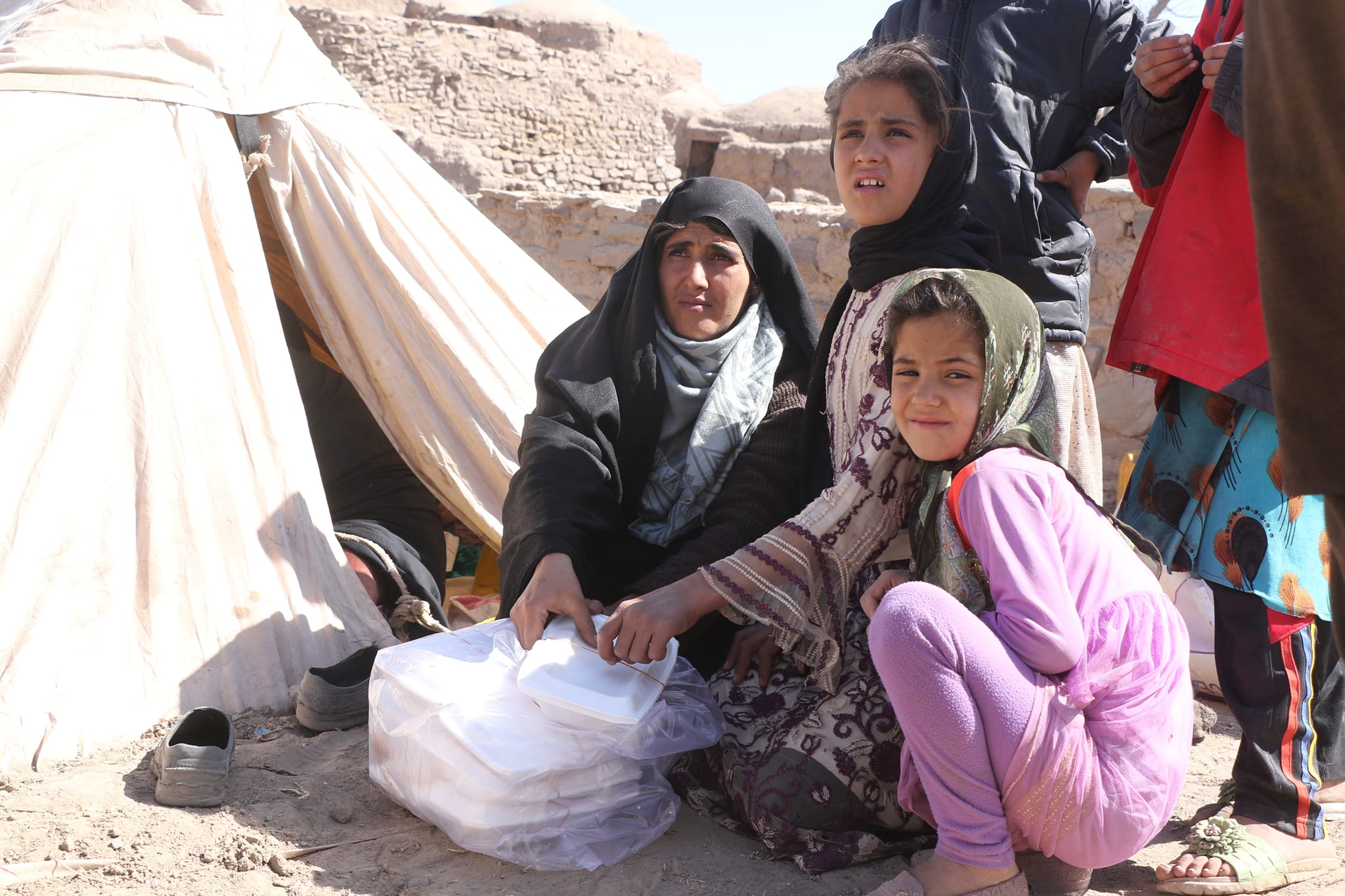
The Afghan Institute of Learning (AIL) is committed to bringing peace and dignity to the Afghan people as they struggle to overcome poverty, oppression, economic devastation, and injustice wrought by the last thirty years of war and sectarian violence.
AIL works will all people, women, girls, men and boys. AIL is there for all the disadvantaged who need help. Approximately 70% of the direct beneficiaries of AIL's programs are female but men and boys also need the chance to make changes in their lives and communities. That opportunity to make a small change is what makes a huge difference in people's lives. About Us
AIL is an Afghan, women run, non-governmental organization (NGO) which was founded in 1995 by Dr. Sakena Yacoobi to help address the crisis of poor access to education and health services for Afghan people especially women and children. These people cannot support their lives, and this has a huge impact on Afghan society as a whole. AIL’s internationally recognized work plays a major role by creating or reconstructing education and health systems capable of reaching the women and children and men of Afghanistan--whether in refugee camps or in their homeland. AIL’s visionary programs have had a major impact and are now being replicated by the Afghan government and other NGOs in the region. AIL presently has offices in Kabul and Herat, Afghanistan and in Peshawar, Pakistan. It is run by women and 70% of its employees are women. AIL has offered pre-school through university education, training opportunities to teachers in interactive, critical thinking methodologies and training for members of civil society in subjects such as human rights, women’s rights, leadership, and peace. AIL also provides health education and health care through its clinics, health outreach to places such as orphanages and schools and through the wide reaching Community Health Workers Program. AIL believes that an educated people are the key to a future developed Afghanistan. With that in mind, AIL works to empower all Afghans who are needy and oppressed by expanding their education and health opportunities and by fostering self-reliance and community participation. AIL’s goals are to lay a foundation for quality education and good health for years to come and to provide comprehensive education and health services to Afghan women and children, so that they can support and care for themselves. Where did we start? Home schools AIL started during a desperate and dangerous time for education in Afghanistan. Through its Home School Program, AIL kept education for girls alive during the Taliban regime. AIL provided grade 1 through 8 education for girls in an underground system. Underground home schools were the only educational option available to these girls for more than 4 years. In 2001 (the last year of the underground home schools), AIL had 3,000 girls in 80 home schools in Jalalabad, Kabul, Herat, and Logar. AIL had trained more than 80 teachers for the schools. Mobile libraries in Herat and Jalalabad transported reading material between the underground schools. AIL had also begun health programs in Kabul and Jalalabad and an income generating skills class in Herat. The underground schools and health programs gave hope to the students, the community, and the nation. AIL worked with community members to realize their common desire to keep education alive in Afghanistan by allowing some girls to continue their education. Community members cooperated with each other and AIL to secure space for the schools and to ensure that the schools, teachers, and students could teach and learn safely. |
|
AIL’s Approach
AIL requires community participation in all of its projects whether educational or health related, believing that the best results are achieved when everyone is invested and integral to the project. AIL will only take on a project when the community has requested help and then AIL works closely with community leaders in the development and implementation. This visionary strategy has contributed to the fact that communities now contribute 30 to 50 percent of the resources needed for a project some even provide 90% of the cost with AIL providing administrative and teacher training, oversight and a small amount of funding for partial salaries. These community contributions can come in many forms, including volunteer help, assistance with security, and donated space, materials, and supplies. This direct contribution strengthens the community’s involvement in, and ownership of the project and is part of the underlying mission of creating self sustaining development.
Another of AIL’s innovative strategies is to take a holistic approach to its provision of services. AIL believes people need to receive health care but also at the same time health education so the cycle of illness and disease can be broken. Teachers need training in new interactive teaching methodologies but also need to know about peace, leadership, health and human rights so they can pass these onto their students. Illiterate women come to centers to learn an income generating skill like sewing but are encouraged to also enter classes to learn to read and write and do math.
AIL has a track record of 15 years of success seen on the ground in Afghanistan and in recognition received nationally and internationally (see Awards page) as well as shown in the confidence of our supporters but perhaps the greatest testament to its success come in the words of a student.
Malika’s Story
“At 22, my hand was not used to holding pen and chalk. I had never seen anyone in my family write or read but my teachers encouraged and helped me. I have not only become a literate person, but know many things like famous poets, about the human body and health and I have learned math and geometry. I help my son who is in second grade, and my daughter in fifth grade.... This year, because so many more girls are coming to our center, I became a teacher of the first grade….. I earn good money from my sewing skills and use that money for my children’s education. Recently I started training in the Community Health Worker program in our village. I am able to do all of this because I am literate and now I can have an effect on others. I learned from AIL, and now I help others learn. That is the new meaning in my life.”
AIL requires community participation in all of its projects whether educational or health related, believing that the best results are achieved when everyone is invested and integral to the project. AIL will only take on a project when the community has requested help and then AIL works closely with community leaders in the development and implementation. This visionary strategy has contributed to the fact that communities now contribute 30 to 50 percent of the resources needed for a project some even provide 90% of the cost with AIL providing administrative and teacher training, oversight and a small amount of funding for partial salaries. These community contributions can come in many forms, including volunteer help, assistance with security, and donated space, materials, and supplies. This direct contribution strengthens the community’s involvement in, and ownership of the project and is part of the underlying mission of creating self sustaining development.
Another of AIL’s innovative strategies is to take a holistic approach to its provision of services. AIL believes people need to receive health care but also at the same time health education so the cycle of illness and disease can be broken. Teachers need training in new interactive teaching methodologies but also need to know about peace, leadership, health and human rights so they can pass these onto their students. Illiterate women come to centers to learn an income generating skill like sewing but are encouraged to also enter classes to learn to read and write and do math.
AIL has a track record of 15 years of success seen on the ground in Afghanistan and in recognition received nationally and internationally (see Awards page) as well as shown in the confidence of our supporters but perhaps the greatest testament to its success come in the words of a student.
Malika’s Story
“At 22, my hand was not used to holding pen and chalk. I had never seen anyone in my family write or read but my teachers encouraged and helped me. I have not only become a literate person, but know many things like famous poets, about the human body and health and I have learned math and geometry. I help my son who is in second grade, and my daughter in fifth grade.... This year, because so many more girls are coming to our center, I became a teacher of the first grade….. I earn good money from my sewing skills and use that money for my children’s education. Recently I started training in the Community Health Worker program in our village. I am able to do all of this because I am literate and now I can have an effect on others. I learned from AIL, and now I help others learn. That is the new meaning in my life.”
AIL CONFERENCE ON LOVE AND FORGIVENESS - POET RUMI - HERAT APRIL 8-9, 2012
Since 1995, the Afghan Institute of Learning (AIL) has been helping Afghans lift themselves above the devastation of war by providing education, training, health care, and health education. AIL’s approach is to interlink health and education programs, like building blocks that together form a whole structure. While delivering these basic services AIL has also been able to promote critical thinking skills and model and teach human rights, women’s rights, peace, democracy, and leadership. With new skills and information, Afghans are becoming empowered and hopeful. Through the natural progression that exists when people begin to think for themselves, AIL often receives requests from Afghans who want to find
ways to work together to promote love, understanding, and forgiveness to their people in order to return to a peaceful way of life; the way of their country’s history.
Supported by Fetzer Institute, AIL responded to these requests by holding an International Conference on Love and Forgiveness that will be shared throughout the country and internationally via film. This conference focused on the study of Afghan poets and musicians, particularly the work of Mawlana (Rumi). Participating in the conference were poets, writers, Sufis and government representatives from all parts of Afghanistan and the world.
Joining the Conference, in person, or via film or writings:
· Poet Coleman Barks; known as the pre-eminent translator of Rumi, the great 13th century poet and teacher. Mr. Barks’ writings and translations have filled 15 books that are more popular than other renderings of these ancient words. They make Rumi’s raptures accessible to the world beyond their creation.
· Stephen Olsson, President of CEM Productions, has produced and directed documentary films, television series and feature news reports throughout the world for US and European broadcasters. He also produced and directed: Afghanistan: The Fight For A Way of Life, which was broadcast throughout the world and cited by The New York Times as one of the best documentary films of the year.
· Divine Mother Audrey Kitagawa, a former attorney, practiced in Honolulu for twenty years, and became the spiritual leader of The Light of Awareness International Spiritual Family, a worldwide community based in Hawaii. Divine Mother Audrey is a prolific writer on matters of spirituality and multiculturalism and serves on many global, spiritual and UN advisory boards, including as Advisor to the World Federation of United Nations Associations.
AIL invites you to join Afghans in thought and through your own study of music and poetry that brings us all closer to the peaceful world we endeavor to achieve.
Since 1995, the Afghan Institute of Learning (AIL) has been helping Afghans lift themselves above the devastation of war by providing education, training, health care, and health education. AIL’s approach is to interlink health and education programs, like building blocks that together form a whole structure. While delivering these basic services AIL has also been able to promote critical thinking skills and model and teach human rights, women’s rights, peace, democracy, and leadership. With new skills and information, Afghans are becoming empowered and hopeful. Through the natural progression that exists when people begin to think for themselves, AIL often receives requests from Afghans who want to find
ways to work together to promote love, understanding, and forgiveness to their people in order to return to a peaceful way of life; the way of their country’s history.
Supported by Fetzer Institute, AIL responded to these requests by holding an International Conference on Love and Forgiveness that will be shared throughout the country and internationally via film. This conference focused on the study of Afghan poets and musicians, particularly the work of Mawlana (Rumi). Participating in the conference were poets, writers, Sufis and government representatives from all parts of Afghanistan and the world.
Joining the Conference, in person, or via film or writings:
· Poet Coleman Barks; known as the pre-eminent translator of Rumi, the great 13th century poet and teacher. Mr. Barks’ writings and translations have filled 15 books that are more popular than other renderings of these ancient words. They make Rumi’s raptures accessible to the world beyond their creation.
· Stephen Olsson, President of CEM Productions, has produced and directed documentary films, television series and feature news reports throughout the world for US and European broadcasters. He also produced and directed: Afghanistan: The Fight For A Way of Life, which was broadcast throughout the world and cited by The New York Times as one of the best documentary films of the year.
· Divine Mother Audrey Kitagawa, a former attorney, practiced in Honolulu for twenty years, and became the spiritual leader of The Light of Awareness International Spiritual Family, a worldwide community based in Hawaii. Divine Mother Audrey is a prolific writer on matters of spirituality and multiculturalism and serves on many global, spiritual and UN advisory boards, including as Advisor to the World Federation of United Nations Associations.
AIL invites you to join Afghans in thought and through your own study of music and poetry that brings us all closer to the peaceful world we endeavor to achieve.